





Guide To Natural Retinols: A Softer Path To Renewal
Retinoids have earned quite the reputation. Hailed as the skincare holy grail, these Vitamin A derivatives are said to smooth fine lines, clear congestion, fade pigmentation and, depending on the Cher song you're listening to... turn back time.
For all its celebrated benefits, this family of ingredients – from over-the-counter retinol to prescription-strength adapalene and tretinoin – asks a lot of the skin. Frequent use can trigger dryness, peeling, redness and a sensitivity that's become almost a rite of passage in modern skincare. Irritation is often mistaken for proof that a product is working, but there's a gentler path to renewal – one that doesn't come at the expense of your skin barrier.
What Is A Natural Retinol?
Before we wander into the world of botanical skincare, it helps to understand where the retinols we now see, read about and watch on countless TikToks actually came from. Retinoid is an umbrella term for Vitamin A and its derivatives – an essential nutrient for vision, immunity and skin health.
Around the middle of the 20th century, researchers began exploring Vitamin A as a treatment for acne. Topical tretinoin entered dermatology in the early 1960s, helping regulate the way skin cells develop and move through the surface layers.
Its age-related benefits were discovered almost by accident, when dermatologists noticed that patients using tretinoin for acne were also developing smoother, more evenly pigmented skin. Further research revealed it could improve signs of sun damage, fine lines, uneven texture and discolouration too – with the occasional trade-off of dryness, stinging, flaking and redness.
Enter natural retinols: skincare shorthand for plant-derived ingredients that improve firmness, texture and tone without functioning exactly like a Vitamin A retinoid. These botanical alternatives tend to be gentler than their synthetic counterparts, weaving easily into a regular ritual without the downtime, peeling or sensitivity.
We look to botanicals such as bakuchiol, rosehip oil, and sea buckthorn, which aren’t technically retinoids, but support similar concerns and outcomes: smoother texture, a more even tone, antioxidant protection, and skin that feels resilient, replenished, and radiant.
The trade-off is evidence. Retinoids have been clinically studied for decades, while research into botanical alternatives is still evolving and often dependent on the finished formulation. Two products featuring the same hero ingredient can perform very differently depending on concentration, stability, extraction method and supporting ingredients.
While ‘natural’ sounds gentle by definition, plant-based ingredients can still contain biologically active compounds capable of irritating the skin. We recommend a patch test and gradual introduction, particularly if your skin runs reactive.
Nature's Gentle Renewers
Bakuchiol: Drawn from the seeds and leaves of the babchi plant (Psoralea corylifolia), bakuchiol is often called a natural retinol. Emerging research supports its use as a holistic, multidirectional approach to skin ageing, thanks to antioxidative, anti-inflammatory and cell-regenerating properties that boost extracellular matrix (ECM) components, including collagen and elastin, while improving epidermal regeneration and re-epithelialisation. Quite the résumé. Find bakuchiol in Aleph Beauty's The One (Reset and Restore Moisture Cream), Imbibe's Collagen Eyes, or Gracious Minds' Herbal Gold Barrier Rich Night Cream.
Rosehip: Pressed from the small fruits and seeds that form beneath the rose flower, rosehip oil nourishes the skin through nutrient-dense hydration. It contains antioxidant-like carotenoids associated with Vitamin A activity, restoring suppleness to skin that feels dry, dull or depleted, without an explicit retinol-like effect. Look for rosehip in The Wooed's Botanical Face Oil and ACTIVIST Manuka's A.M.S. Green Botanical Serum.
Microalgae: An emerging ingredient with promising early research, microalgae-derived bioretinoid (MBR) has outperformed both retinol and bakuchiol in cell proliferation, melanin reduction and ECM modulation, improving skin texture and firmness in clinical studies. One to watch.
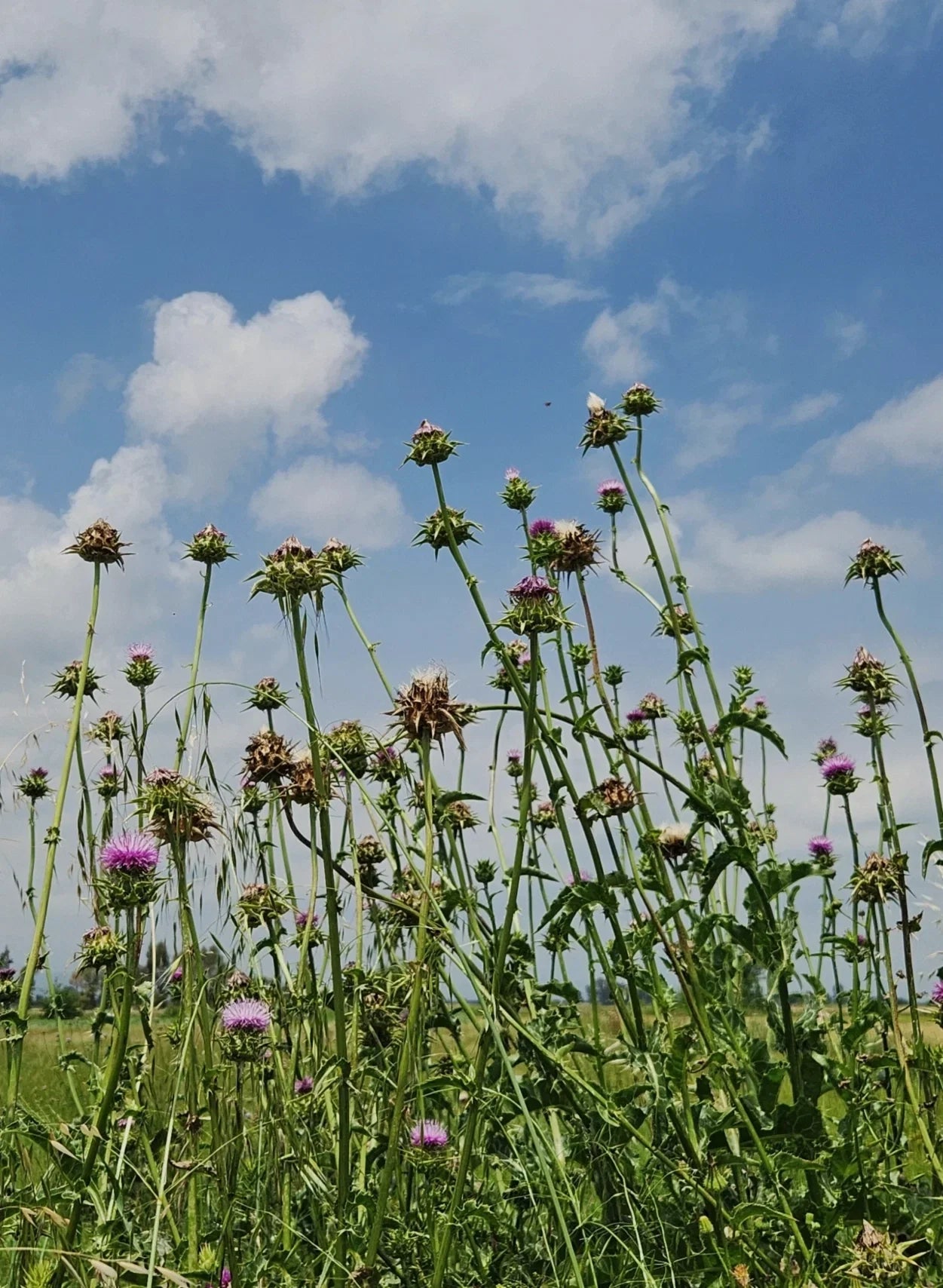
Milk Thistle: Silybum marianum, a liver-loving favourite here at Orchard St., is not merely a herbal tonic but an effective topical, showing a significant anti-wrinkle effect in studies. By boosting levels of collagen III – sometimes called the ‘youth collagen’ – and hyaluronic acid, it supports collagen maturation and skin plumping.
Sea Buckthorn Oil: A darling of the natural beauty world, sea buckthorn berries grow on hardy shrubs across Europe and Asia, glowing a vivid orange thanks to naturally occurring carotenoids. The oil is rich in Vitamin E compounds and a generous spectrum of fatty acids that soften and comfort the skin barrier while protecting against oxidative damage. Less potent than some of its natural-retinol counterparts, yet a graceful addition to any ageing-well cabinet.
The Softer Path
These plant-based alternatives offer a gentler road to the same destination – supporting renewal whilst replenishing and protecting the skin barrier. Each works according to the laws of its own nature, not by erasing the passage of time, but by helping skin meet it with more reverence and resilience.
Whatever path you choose, skin renewal responds better to consistency than intensity. Introduce one new active at a time, and tune in to the subtle shifts in texture and tone as you go.
- Kirsten x